project
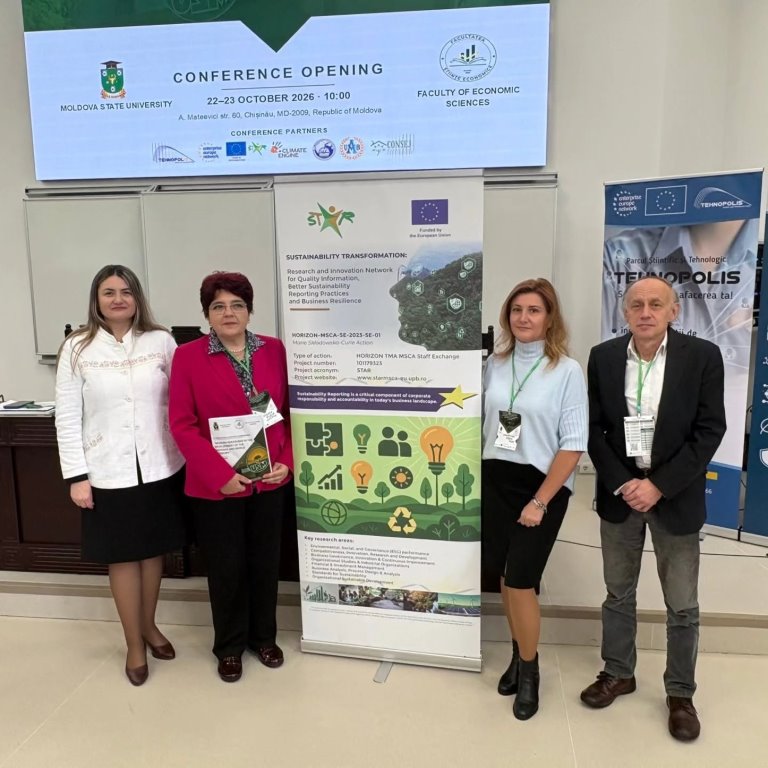
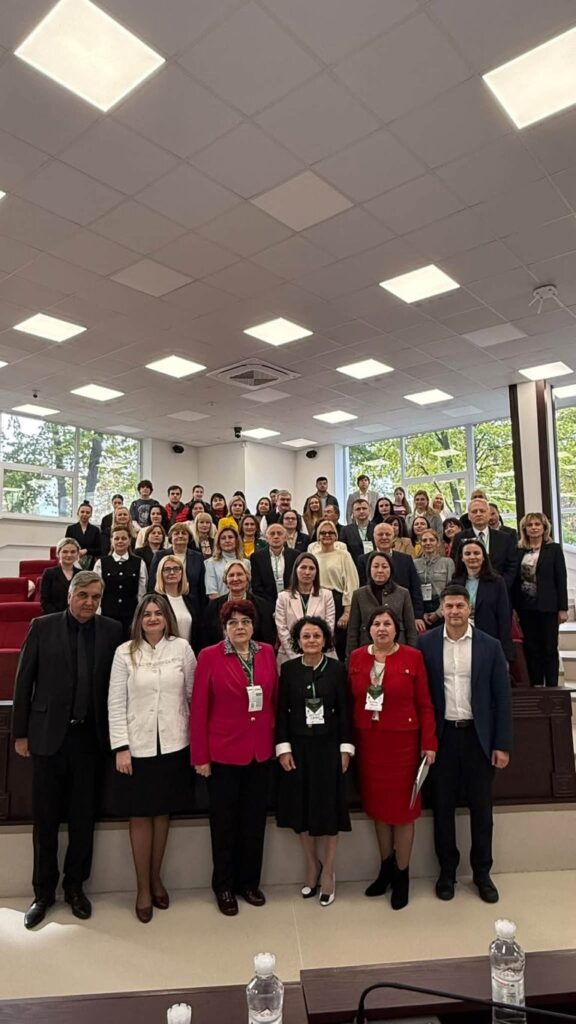
During October 22–23, 2026, the Moldova State University (P3.USM) hosted the 19th edition of the International Scientific Conference “Modern Paradigms in the Development of the National and
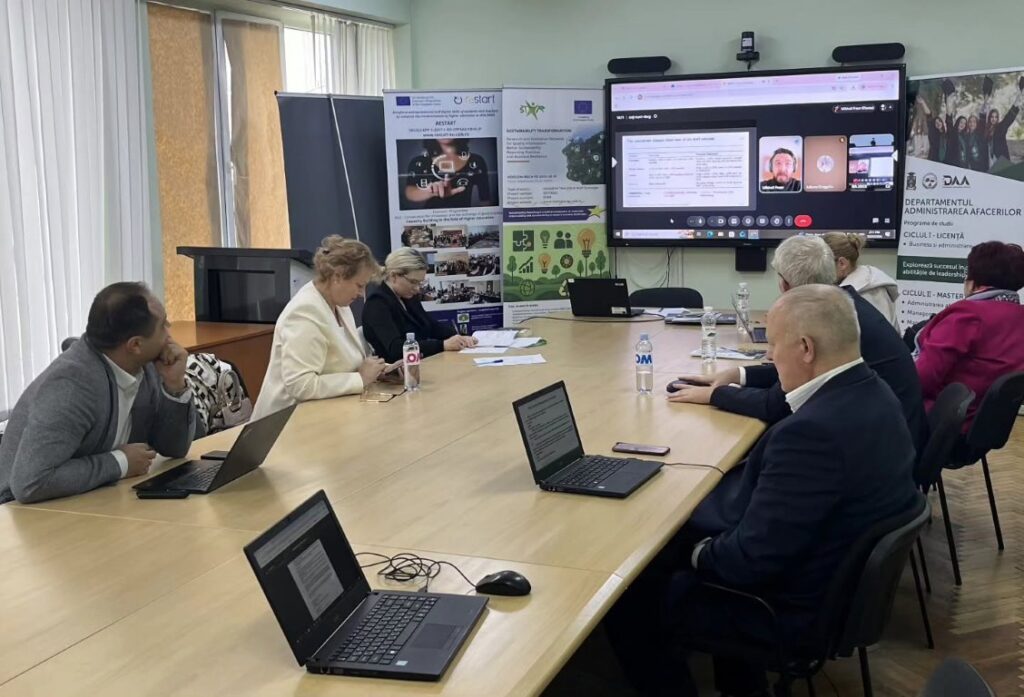
World Economy”. As part of this academic event, the 2nd Edition of the Specialized Section 6: “Research and Innovation for Sustainability Reporting and Business Resilience” was organized, an initiative carried out entirely under the auspices of the STAR project (HORIZON-MSCA-2023-SE-01, Marie Skłodowska-Curie Actions, Grant Agreement no. 101179323).
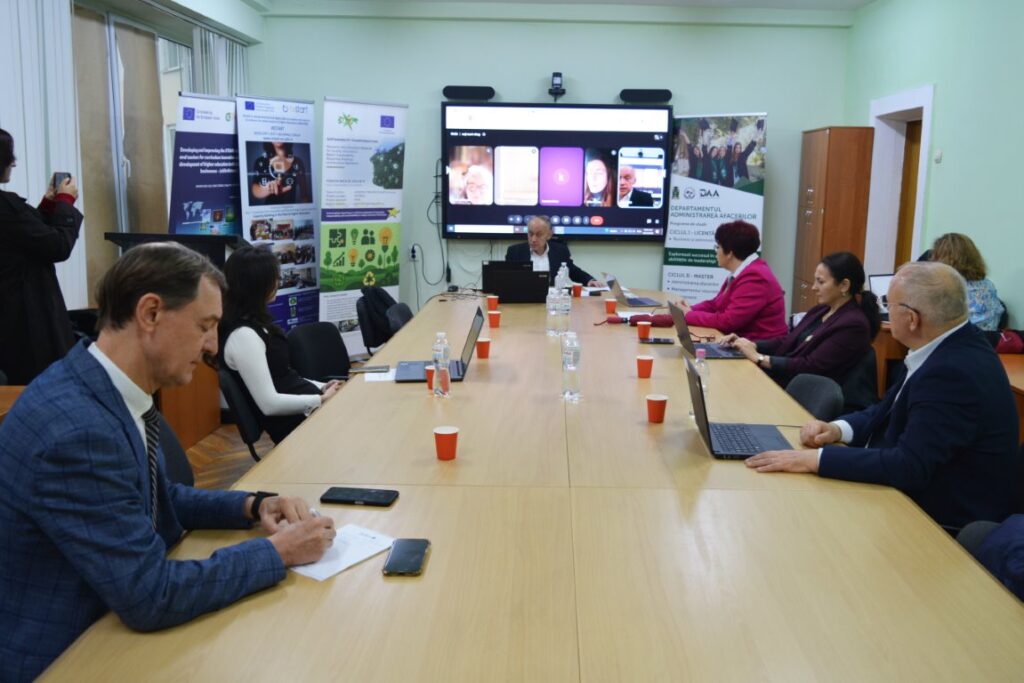
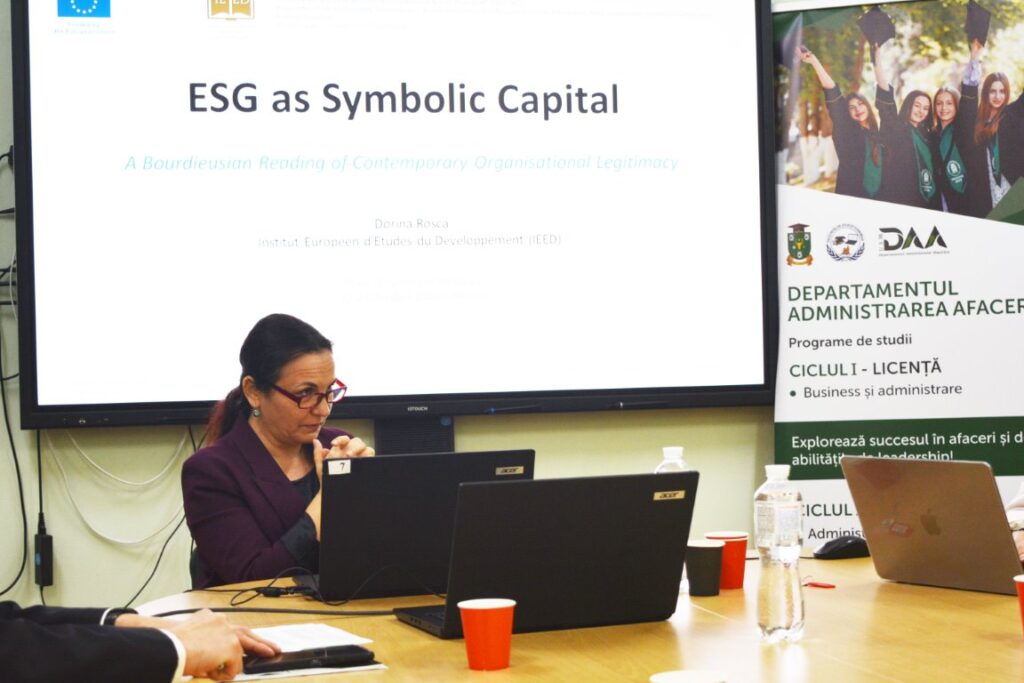
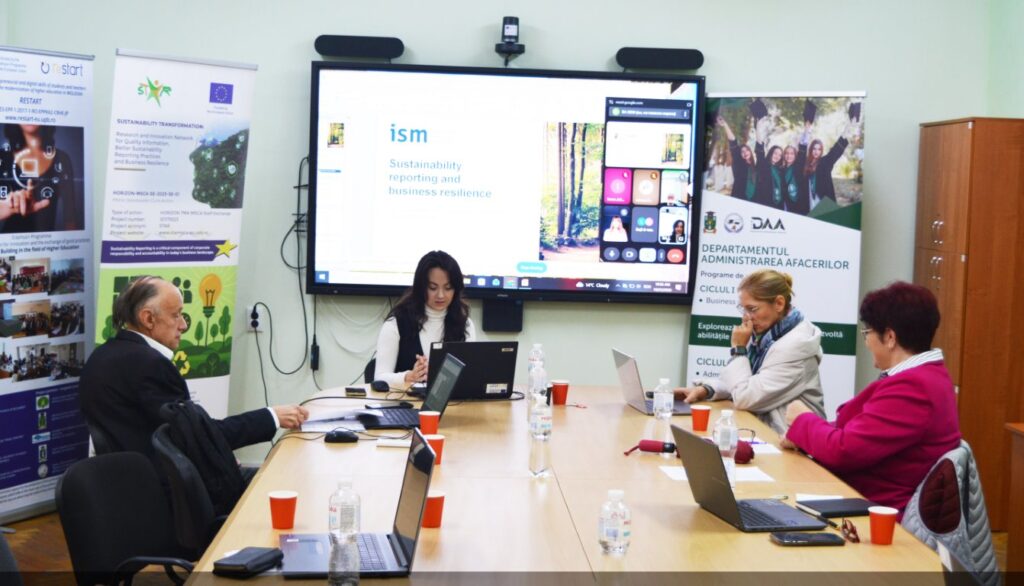
Prof. univ. Dr. ing. Elena Fleaca, the general coordinator of the STAR-HORIZON project at the National University of Science and Technology POLITEHNICA Bucharest (P1.UNSTPB), Romania, gave a presentation in the conference plenary, addressing a topic of maximum interest and methodological rigor, focused on the assessment of double materiality in practice through a comparative study applied to agri-food value chains in Eastern Europe. Section 6, moderated by Dr., Assoc. Prof. Marian Jalencu (USM), functioned as a veritable platform for the dissemination of the results obtained by the consortium partners following the mobility internships (secondments). The research team consisting of Robert Błaźlak, Irena Barbara Jałmużna, Przemysław Sękalski and Katarzyna Żykwińska (P5.Lodz University of Technology) made a fundamental contribution focused on the digital transformation of reporting. They analyzed the impact of regulatory uncertainty and the level of digital readiness on the development of ESG reporting tools in Poland. Researcher Dorina Rosca (P10.Institut Européen d’Études du Développement) presented a paper of high theoretical and applied value, positioning ESG criteria as a modern form of symbolic capital for contemporary organizations. P3.USM researchers had several presentations, during which they disseminated a comparative study that assessed ESG transparency and its cultural and institutional factors in the Republic of Moldova, Romania and Italy, as well as the degree of readiness of Moldovan companies for sustainability reporting.
They also presented an X-ray of the current state of sustainability reporting at the country level, through a diagnostic analysis of ESG reporting practices in the Republic of Moldova, etc.
The 2nd edition of this specialized section reconfirmed the role of the STAR project as a catalyst for technological transfer from academia to the real economic sector.